

 Keith Nallawalla
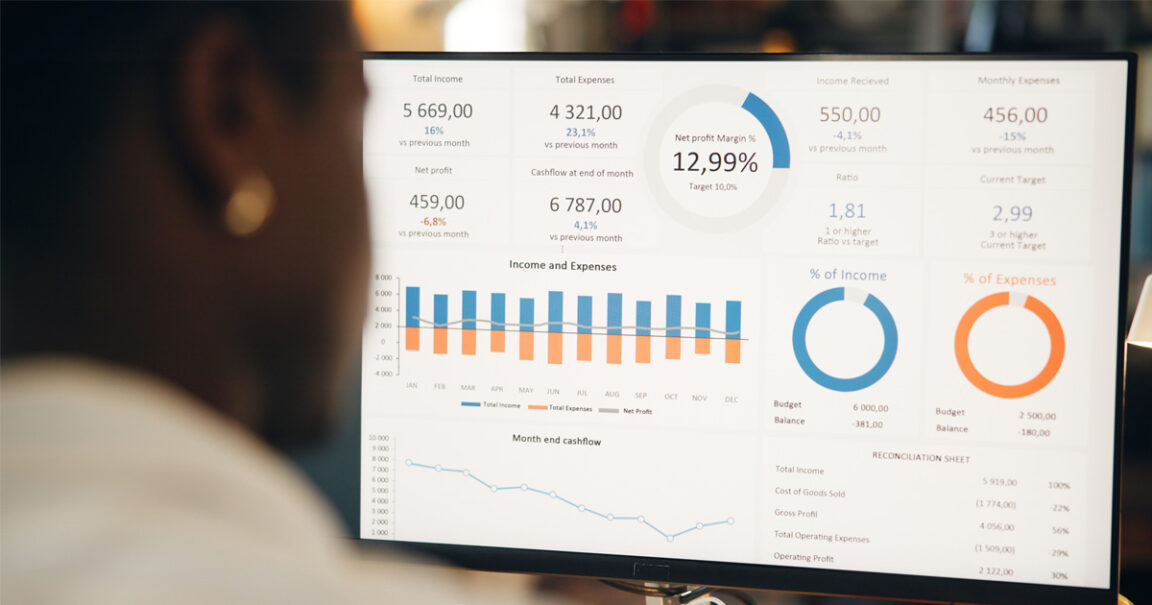
I’ve sat in more marketing meetings than I care to remember where someone has slapped a Google Analytics screenshot on the screen and declared victory because the traffic line is going up. Sessions are up 40%. Page views are through the roof. The boss nods approvingly. Everyone goes home feeling like they’ve done something.
And then the revenue numbers come in and nobody can quite explain why they’re flat.
More traffic isn’t always better. It’s a statement that sounds almost heretical in marketing circles, where the default assumption is that eyeballs equal outcomes. But if those eyeballs belong to people who were never going to buy from you in the first place, you’ve just spent money attracting the wrong audience. Congratulations, I suppose.
The Problem With Vanity Metrics
Traffic, on its own, is a vanity metric. So are page views, social media followers, and the number of shares your latest post got. They feel good. They’re easy to report on. They give you something to point at in those monthly marketing meetings. But vanity metrics don’t pay your staff or your rent.
The classic example is the cat picture blog post. You write something like “25 Cats Who Look Exactly Like Australian Politicians” and it goes absolutely gangbusters on social media. Thousands of shares. Tens of thousands of visits in a week. Your traffic dashboard is a sea of green upward arrows. Wonderful.
Now ask yourself: who actually shared that post? People who like cats. People who like political jokes. Probably your mate from uni who shares everything. Almost certainly not the procurement manager at a mid-sized South Melbourne logistics company who is actively looking for a new freight software solution and has budget approval to spend $50,000 this quarter.
Unless you’re selling cat food or novelty political merchandise, that traffic spike means essentially nothing.
Traffic That Actually Matters
There’s a useful way to think about website traffic, and it comes down to intent. Some people visit your site because they’re ready to do something. They want to buy, enquire, book, or sign up. Others are browsing, learning, or just passing through. Both groups can be valuable, but only if you understand the difference and stop treating them the same.
Bottom-of-funnel traffic is what drives revenue. These are people searching for something specific. “Commercial refrigeration repair Melbourne,” “affordable family law solicitor,” “best accounting software for small business Australia.” They know what they want. They’re comparing options. They’re close to making a decision. Getting in front of these people is worth spending real money on, because the conversion rates reflect the intent.
Top-of-funnel traffic is earlier in the journey. These people might not even know they have a problem yet, let alone that you can solve it. Content for this audience has its place, particularly for brand awareness and building an audience over time. But it’s a long game, and if your business needs revenue now, pouring resources into traffic that’s eighteen months away from converting is a questionable call.
The mistake most businesses make is conflating the two. They celebrate the cat picture traffic spike as proof that their content strategy is working, without stopping to ask whether any of those visitors had any interest in their actual product or service.
A Real Example of Traffic Gone Wrong
I worked with a business a few years back that had invested heavily in a company blog. They’d been at it for a couple of years and the traffic was genuinely impressive. Tens of thousands of monthly visitors. Strong engagement. Decent social following.
But the blog was almost entirely informational content, the kind of stuff that ranks well because people search for it, but attracts an audience that’s mostly curious rather than ready to buy. Things like “how does [industry process] work” and “what is [industry term]” and so on. Great for positioning yourself as a knowledgeable voice in your space. Not so great for actually generating leads.
When we looked at the conversion data, the picture was bleak. Their highest-traffic pages were contributing almost nothing to the enquiry pipeline. Meanwhile, a handful of lower-traffic pages, the ones targeting specific buying intent keywords, were responsible for the overwhelming majority of leads.
They’d essentially built a popular magazine that happened to have nothing to do with their business. Interesting, but not particularly useful.
How to Tell the Difference in Your Own Analytics
You don’t need a data science degree to figure out whether your traffic is actually valuable. A few things to look at:
Conversion rate by channel and page. If your organic search traffic converts at 3% and your viral social traffic converts at 0.1%, that tells you something important about the relative value of those audiences. Google Analytics 4 will show you this if you have your goals or conversions set up properly. And if you haven’t set up conversion tracking, that’s a different problem to fix first.
Engagement metrics that go beyond bounce rate. Time on site matters, but in context. Someone spending four minutes reading your genuinely useful buying guide is different from someone spending four minutes on a blog post about cats before bouncing forever. Look at what people do after they land. Do they visit your services page? Do they go to your pricing or contact page? Or do they just leave?
Revenue or leads by source. This is the one that actually matters. If you have e-commerce, you can see exactly which traffic sources are generating revenue. If you’re lead-based, you should be tracking which source each enquiry came from. According to research from Ruler Analytics, average conversion rates vary enormously by industry and channel. If you’re not tracking this, you genuinely have no idea what’s working.
Returning visitors for commercial content. People who are seriously considering buying something often visit multiple times before they commit. If your high-intent pages are generating returning visitors, that’s a strong signal. If people visit once from a social share and never come back, that’s a signal too.
Quality Over Quantity Is Not Just a Cliche
The phrase has been flogged to death by marketers who then immediately go and chase follower counts and traffic graphs, but the principle is sound. A thousand visitors from people who are actively searching for what you sell is worth more than fifty thousand visitors who clicked through from a funny meme.
HubSpot’s research has consistently shown that businesses focused on targeted, intent-driven content tend to see better ROI from their content efforts than those chasing volume. That’s not a surprise. It’s what you’d expect if you thought about it for thirty seconds. But somehow, when there’s a flashy traffic graph involved, common sense tends to go out the window.
This doesn’t mean top-of-funnel content has no value. For some businesses, particularly those with longer sales cycles or higher consideration products, brand awareness and audience building genuinely matter. But you need to be honest with yourself about what you’re doing and why. Are you creating awareness content because it’s part of a considered strategy, or are you creating it because it’s easier to measure success in shares than in sales?
The SEO Angle
This matters particularly for SEO, which is my world. It’s very easy to optimise your way to a lot of traffic that does very little for your business.
I’ve seen sites rank page one for thousands of keywords, driving significant traffic, while generating almost no commercial outcomes whatsoever. Usually because the keywords they ranked for were purely informational, attracting researchers and curious browsers rather than buyers.
The smartest SEO strategies focus on search intent. Not just “what keywords can we rank for” but “who is searching this, what do they want, and are those people likely to become customers.” A term that gets 500 searches a month from people actively looking to hire your kind of business is usually worth more than one that gets 50,000 searches a month from students doing assignments.
It’s also worth thinking about the downstream effects of irrelevant traffic. If people are landing on your site and leaving immediately because the content doesn’t match what they were expecting, that can affect how Google views your pages. High volumes of low-quality visits aren’t a neutral outcome. They can actively dilute the signals that matter.
What to Measure Instead
So if raw traffic is the wrong thing to celebrate, what should you be looking at?
Revenue or leads by channel is the obvious answer. But not every business has clean attribution data, and that’s fine. Start with what you have. Even a rough picture of which channels are generating enquiries is better than optimising for page views and calling it a day.
Cost per acquisition matters too. Even if a particular channel is delivering good-quality traffic and solid leads, if you’re spending more to acquire each customer than they’re worth to your business, that’s a problem. Customer lifetime value versus acquisition cost is the ratio that actually determines whether a marketing channel is sustainable.
Keyword rankings for commercial terms, not just informational ones. If you’re doing SEO, track where you sit for the keywords that indicate buying intent, not just the ones that get the most searches.
And honestly? Talk to your actual customers about how they found you. The most underrated piece of marketing research is just asking. Not through a survey with seventeen questions and a chance to win a gift card, just a genuine conversation. “How did you hear about us?” still works.
The Trap of Chasing the Algorithm
Social media platforms in particular are very good at dangling traffic in front of you in exchange for creating content that serves their platform rather than your business. Posts that generate lots of comments, shares, and engagement get shown to more people. But the content that generates that kind of engagement is often deliberately provocative, emotionally charged, or just plain entertaining. Which is fine for media companies. It’s a questionable strategy for a B2B software company or a tradie trying to get more jobs.
There’s nothing wrong with having an entertaining social presence if it makes sense for your brand. But it should be in service of a commercial goal, not a substitute for one. Your Instagram reels getting 200,000 views means nothing if none of those viewers are ever going to become customers. The platform got value out of your content. You got a notification and a warm feeling. That’s not a fair trade.
Your Traffic Is Dropping and It Might Not Be Anyone’s Fault
There’s a newer wrinkle to all of this that’s making the conversation about traffic even more complicated, and that’s AI search.
Google’s AI Overviews now appear at the top of results for a growing share of queries. Instead of a list of links, you get a synthesised answer pulled together from multiple sources, right there on the results page. No click required. ChatGPT, Perplexity, and similar tools are doing the same thing in their own environments. Someone asks “what’s the best accounting software for a small business in Australia” and they get a fairly detailed answer, possibly including a recommendation, without ever visiting your website.
The scale of this shift is worth understanding. According to Similarweb data, zero-click searches rose from 56% to 69% of all Google searches between May 2024 and May 2025. That means roughly seven out of ten searches now end without anyone clicking through to a website. A Pew Research study tracking real user behaviour found that when AI summaries appeared in results, users clicked on links just 8% of the time, compared to 15% without them. That’s nearly a 47% relative drop in click-through rate.
And 73% of B2B websites experienced significant traffic loss between 2024 and 2025. If you’re looking at your analytics right now and wondering what happened, there’s a reasonable chance the answer isn’t “your SEO agency did something wrong.” It’s that the structural mechanics of how search works have shifted underneath everyone’s feet.
This matters enormously for managing client expectations. If a business has been getting 20,000 organic visits a month and that number drops to 14,000, the default reaction is to assume something is broken and someone should be held accountable. Sometimes that’s true. But right now, a significant chunk of traffic declines across the internet are happening to sites that haven’t changed anything, and wouldn’t have changed anything, because the problem isn’t on their end.
Here’s where it connects back to the quality argument, though. The traffic that’s disappearing fastest is informational traffic. How-to content, definition searches, general research queries, these are the ones AI tools are best at answering without a click. If your traffic strategy was built on ranking for those kinds of queries, you’re going to feel this more acutely than a business whose organic traffic was already concentrated on commercial, transactional searches.
If someone is Googling “how do I remove a stripped screw,” they’re probably happy to get the answer from an AI Overview and move on. But if they’re searching “electrician South Melbourne quote,” they’re going to click through to actual businesses, because they need to make contact and hire someone. That intent-driven, conversion-ready traffic is much more resilient to the AI zero-click shift than the informational stuff.
There’s also a flip side worth considering. If an AI tool recommends your business by name when someone asks for suggestions in your category, that’s a form of visibility that doesn’t show up in your traffic numbers at all. Your analytics will show nothing. No session, no page view, no referral. But someone just heard about you and might call you tomorrow. The traditional metrics can’t capture that, which is another reason to stop treating traffic as a proxy for success.
The implication for how businesses should think about their online presence is pretty significant. Being cited by AI tools, whether through Google’s AI Overviews, ChatGPT, or Perplexity, is becoming its own form of brand exposure. The businesses that get recommended tend to be the ones with strong reputations, authoritative content, and genuine expertise in their area. Which, not coincidentally, is exactly what good SEO has always been about. The tactics change, but the fundamentals don’t.
What it does mean is that measuring success purely through traffic volume is becoming even less meaningful than it already was. You need to know whether the traffic you’re getting is converting. You need to be tracking direct enquiries, phone calls, form submissions. You need to ask new customers how they found you, because increasingly the answer might be “an AI suggested you” and that will never appear in any dashboard you own.
Actually Useful Traffic
The traffic worth getting is from people who have a problem you can solve, are actively looking for a solution, and have found your site as part of that search. That’s it. Everything else is either brand building (which has a place, but be honest that’s what it is) or noise.
Getting that kind of traffic is harder than going viral with a list of funny cat pictures. It requires understanding your customers well enough to know what they search for when they’re in buying mode. It requires producing content that matches that intent, not just content that’s easy to promote. And it requires measuring outcomes that actually connect to revenue, not just the metrics that make your traffic dashboard look impressive.
But when you get it right, the numbers that matter start moving. Not just the ones in the marketing report.
And that’s the whole point, isn’t it.