

 Keith Nallawalla
Most of the crisis comms case studies worth knowing involve a death, a lawsuit or a congressional hearing. This one’s just a chicken shop running out of chicken, which is exactly why it’s worth studying on its own. Nobody was hurt. The stakes were, objectively, low. And KFC still managed to turn it into one of the most awarded pieces of crisis communication of the decade.
How a chicken restaurant ran out of chicken
On 14 February 2018, KFC switched its UK delivery contract from its longtime logistics partner, Bidvest, to DHL, working out of a new single distribution centre in Rugby. There was no parallel run and no gradual rollout. The old system stopped and the new one started, cold, for roughly 900 restaurants at once. Within two days, the new depot was struggling to get deliveries out on time. By 19 February, more than 600 of those 900 restaurants had closed, some for lack of chicken, others for lack of basics like fries and gravy that came through the same broken pipeline.
The joke started on Twitter, before the ad did
Most of the corporate world’s instinct in this situation is to go quiet and lawyer up. KFC’s UK social team did the opposite almost immediately, posting “The chicken crossed the road, just not to our restaurants” days before any formal apology campaign existed. The tone was set early: apologetic, a little self mocking, and carefully vague about who exactly the new delivery partner was.
Then came the bucket
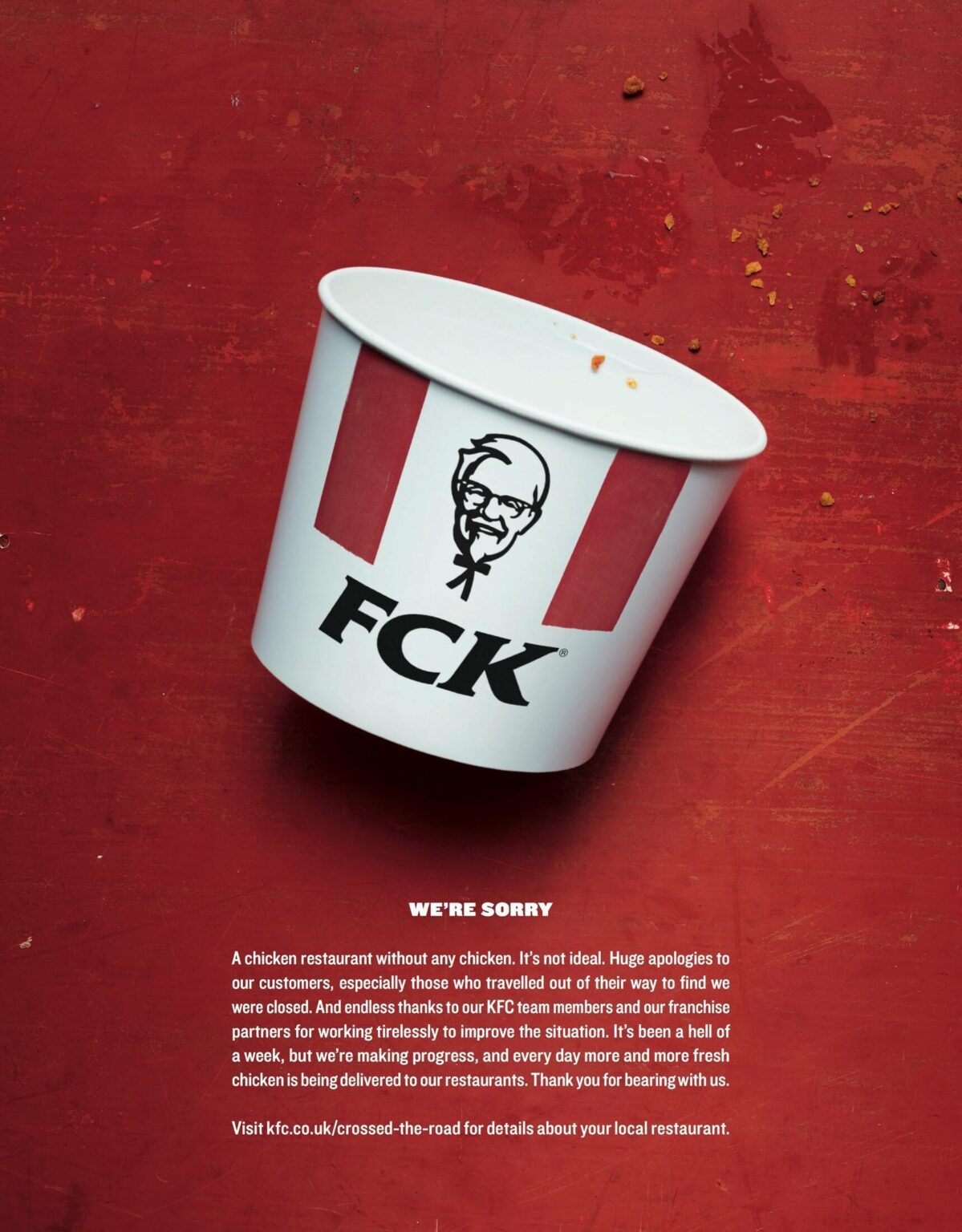
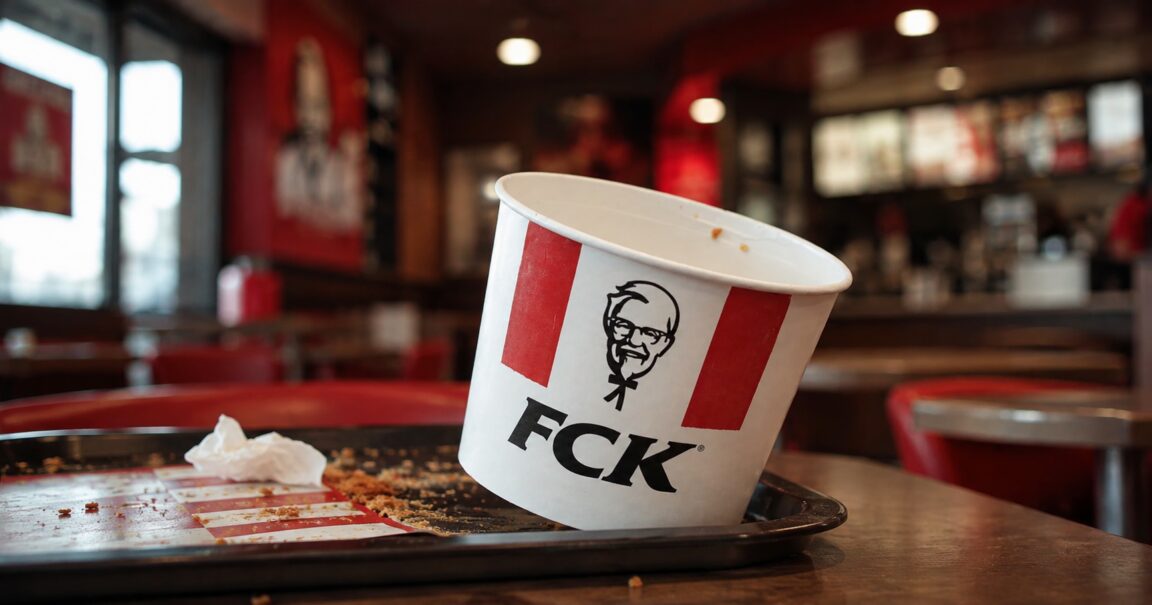
About a week into the crisis, with roughly two thirds of restaurants still affected, KFC and its agency, Mother, ran a full page ad in the Metro and the Sun. It showed an empty KFC bucket with the logo rearranged to spell “FCK”, underneath a short apology reading “A chicken restaurant without any chicken. It’s not ideal.” DHL wasn’t named. Nobody was thrown under the bus. The ad became known inside the industry for what people started calling the three Hs: humility, humour and honesty, in that order.
Did it actually work
By the numbers, unusually well. YouGov’s brand impression score for KFC dropped nine points at the height of the crisis, and within a few months it had not just recovered but landed one point above where it started, a genuinely rare outcome for a company that had just shut down two thirds of its restaurants. YouGov’s own head of brands at the time, Amelia Brophy, described KFC’s core customer base as “very resilient” throughout the whole episode. The ad went on to win multiple Gold Lions at Cannes, and KFC’s UK marketing team later said the campaign had done as much for staff morale as it had for public perception, since it made clear to KFC’s own restaurant workers that the anger belonged aimed at the brand and the supply chain, not at the people standing behind the counter with nothing to sell.
Within a month, KFC had quietly moved 350 of its northern UK restaurants back to Bidvest, running the old and new suppliers side by side rather than betting everything on DHL a second time. Less quotable than the bucket ad, but arguably the more important decision of the two.
Why this one gets taught differently to the others
Every other case in this roundup involves a company that got the tone wrong under real pressure, or one that got the substance right under real stakes. KFC is neither. Nobody’s life was on the line, so the company had room to be genuinely funny about its own failure in a way that would look grotesque coming from an airline after a death or an oil company after a spill. That’s the actual lesson: match the tone of the apology to the size of the harm, and know which situation you’re actually in before you decide how to sound.
More on the harder end of that spectrum in [the wider roundup [LINK: The best and worst corporate apologies of the last 20 years]], if you haven’t already read it.