
 Keith Nallawalla
United Airlines’ Dr Dao crisis: what went wrong twice
Three weeks before this happened, PRWeek named United’s CEO, Oscar Munoz, its 2017 Communicator of the Year. That’s not a joke I’m making up for effect, it actually happened, which makes what follows either very funny or very useful, depending on how you make your living.
The incident itself, quickly
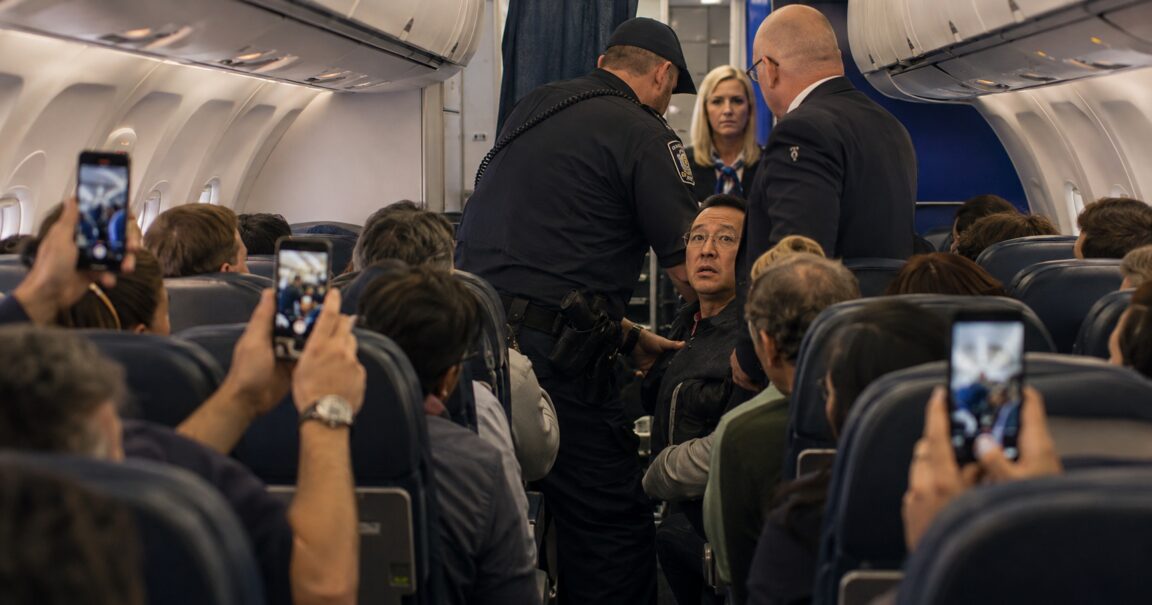
On 9 April 2017, United Express Flight 3411 from Chicago to Louisville was overbooked, and the airline needed four seats back for crew members. Nobody volunteered, even with compensation on offer, so United randomly selected four passengers to be removed. One of them, Dr David Dao, said he needed to see patients the next day and refused to leave. Aviation security officers pulled him out of his seat and dragged him down the aisle while other passengers filmed it on their phones. His injuries were serious, not cosmetic: a broken nose, a concussion his lawyer described as significant, and two lost teeth, with reconstructive surgery needed afterwards. The video was everywhere within hours.
Here’s Munoz himself, a couple of years on, admitting United wasn’t ready for a moment like this:
That part was bad. What United said next made it worse, twice.
Wrong number one: a euphemism instead of an apology
The following afternoon, Munoz’s first public statement read, in part, that he was “upset to see and hear about what happened” and that he was apologising “for having to re-accommodate these customers.” Nobody who has ever flown believes “re-accommodate” is a word a human being reaches for on their own. It’s the kind of phrase that gets written by a process rather than a person, and it told the public that United’s instinct, even after watching the same video everyone else had watched, was to describe an assault as a logistics inconvenience.
Wrong number two: doubling down instead of backing off
Given a bad first attempt, the obvious move is to correct course. United’s second move, a letter Munoz sent to employees that same afternoon, went the other way. It described Dr Dao as “disruptive and belligerent”, said staff had followed “established procedures,” and told employees he “emphatically” stood behind them. The letter leaked within hours. Where the first statement had at least sounded neutral, this one sounded like the company blaming the passenger it had just had dragged off a plane, and it turned a bad news cycle into a much worse one.
What that actually cost, in real time
This isn’t a hypothetical harm. On the Tuesday morning after the letter leaked, United’s stock dropped close to $1 billion in market value before markets even fully opened. By that afternoon, after Munoz finally issued a real apology, the loss had shrunk to around $250 million. The market was, quite literally, pricing in the difference between a bad apology and a real one, in the space of a single afternoon.
The apology that should have come first
That Tuesday statement said Munoz was “disturbed by what happened,” that he “deeply” apologised “to the customer forcibly removed,” and that United would “fix what’s broken so this never happens again.” The next morning, he went on ABC’s Good Morning America, his first interview since the incident, and went further:
He said he felt ashamed watching the footage and that “no one should ever be mistreated this way.” It was, by most accounts, the statement he should have led with on day one. Two attempts too late, United finally said the true thing.
Why the order matters as much as the words
Any one of these three statements, taken alone, tells you something about crisis response. Taken in sequence, they tell you something more specific: getting it wrong once is recoverable, almost expected under pressure. Getting a second, calmer, less rushed attempt and making it worse is the part that actually did the damage, because it removed the excuse that the first version was just a panicked, hasty reaction. By the third try, the market had already made up its mind about what the first two were worth.
For anyone wondering what happened to Dao himself: he never went to trial. He and United reached a confidential, out of court settlement about three weeks after the incident, for an amount that was never disclosed. No verdict, no ruling on who was at fault, just an agreement to close the matter before it became a court case as well as a PR one.
There’s more on how the good examples handled this same moment differently in the wider roundup, if you haven’t already read it.