

 Keith Nallawalla
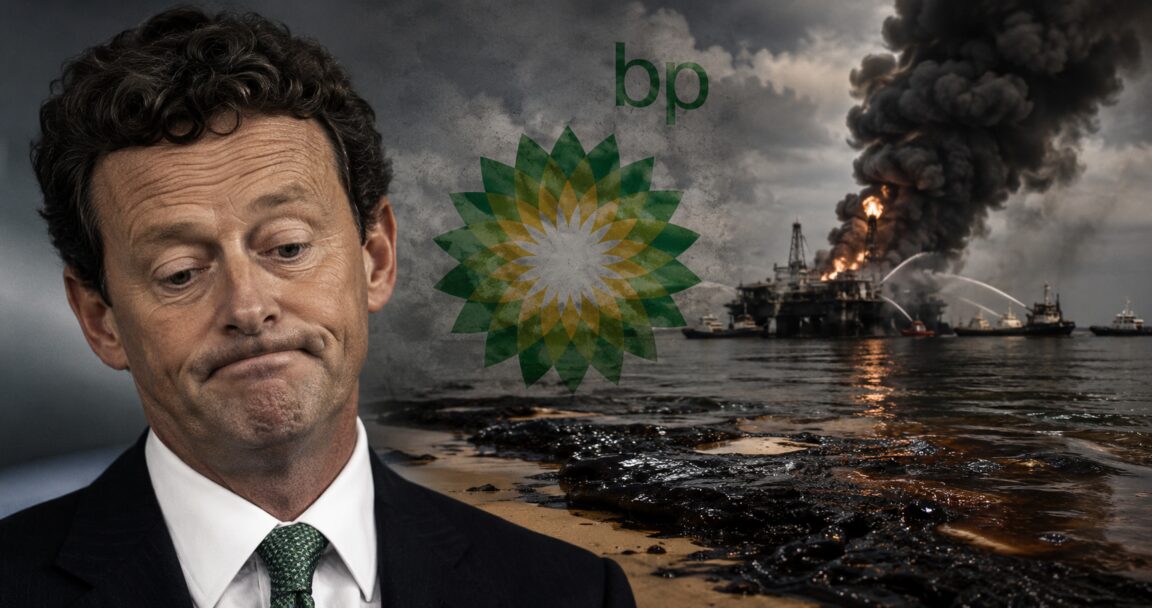
Most executives manage to say one wrong thing during a crisis and learn from it. Tony Hayward, BP’s CEO throughout the Deepwater Horizon disaster, kept finding new ways to get it wrong, spaced out just far enough apart that each one got treated as fresh news, while the actual well was still gushing beneath him the entire time. It takes a special kind of tone deafness to turn an environmental catastrophe into a study of one man’s ego, but Hayward managed it.
The disaster itself
On 20 April 2010, the Deepwater Horizon drilling rig exploded in the Gulf of Mexico, killing 11 workers. The well beneath it kept leaking for 87 days, eventually releasing an estimated 4 million barrels, more than 200 million gallons, of oil, the largest marine spill in the industry’s history. A federal court later found BP grossly negligent, not merely careless, grossly negligent, and 67% at fault for the disaster. Nobody at BP could point to a script for this. What made it so much worse wasn’t the absence of a plan. It was that the company’s own chief executive kept opening his mouth while there wasn’t one, and somehow made each new sentence worse than the last.
Every wrong thing he could have said, he said
Early on, while oil was still actively pouring into the Gulf at a rate nobody at BP would honestly disclose, Hayward told reporters it was “a big ocean” and that the spill’s environmental impact was “likely to be very, very modest.” You probably wouldn’t be shocked to hear that a career oil executive doesn’t lose much sleep over the environment, but hearing him say it out loud, five weeks into the biggest marine spill in the industry’s history, still landed like a confession. Eleven men were already dead. Five weeks in, with thousands of Gulf Coast residents out of work and the well still not capped, he told a television interview, “I’d like my life back.” Whose life, exactly, was the question nobody needed to ask out loud. One of the widows of the 11 men killed on the rig answered it for him anyway, telling reporters she’d like her husband’s life back too. Hayward apologised for the comment within days, calling it “hurtful and thoughtless,” which is the correct description but arrived roughly five weeks too late to count as an instinct. Then, a few weeks after that, with the spill still unresolved and the Gulf Coast still not cleaned up, he was photographed enjoying a weekend at a yacht race in the UK. The White House’s chief of staff needed one line to finish him off: “I think we can all conclude that Tony Hayward is not going to have a second career in PR consulting.”
None of these were one bad day. They were a pattern, spaced out over the exact period when the company most needed to look like it understood the scale of what was happening.
What it actually cost
BP pled guilty to 14 federal felony counts in 2012 and paid a $4 billion criminal penalty at the time, itself a record. That wasn’t the end of it. In 2015, BP agreed to a $20.8 billion settlement with the US government and five Gulf states, the largest settlement with a single company in the history of American federal law enforcement, on top of billions already paid out to individuals and businesses. BP’s own total cost estimate for the disaster eventually passed $60 billion. Hayward stepped down as CEO that October, replaced by Bob Dudley, and later told the Wall Street Journal he’d “become a villain for doing the right thing.” Eleven men were dead, a federal court had already called his company’s conduct reckless, and he still walked away feeling like the one who’d been wronged.
Why this one is different from a single bad apology
Most of the cases worth studying involve one wrong statement followed by a better one. BP’s problem was structural: a spokesperson whose instinct, under sustained pressure, kept drifting back toward minimising the scale of what was happening and centring his own discomfort, even after being told exactly how badly the first version had landed. United Airlines took two tries to get it wrong before getting it right. BP took the better part of two months to stop making it worse, and by the time it did, “I’d like my life back” had already become the only line most people could remember from the entire crisis.
There’s more on how this compares with the rest of the field in the wider roundup, if you haven’t already read it.